

Three hard-won golden life nuggets for living and interacting with emotions: observe, notice, choose the response
Further exploration of life after closed head injury and severe brain damage

“Falling down is not a failure. Failure comes when you stay where you have fallen.”
— Socrates
This is a follow-up to something I posted here last August about day-to-day life with brain injury.
I wrote then about my injuries and about mindfulness and about noticing my emotions, noticing the world around me and things that happen. I finished it like this:
“So. Storms pass.
As long as I do no damage to myself, to relationships and to others, all is well.
It’s a beautiful life. Cheers to going slow.”
There are two additions to make here. One is about my need for a consistent 8 hours of nightly sleep and what happens to my brain if I miss that. The other concerns how to live with emotions.
It’s important for me to say that I can do complicated things and regularly do them. But that is much harder when my brain is stressed.
==
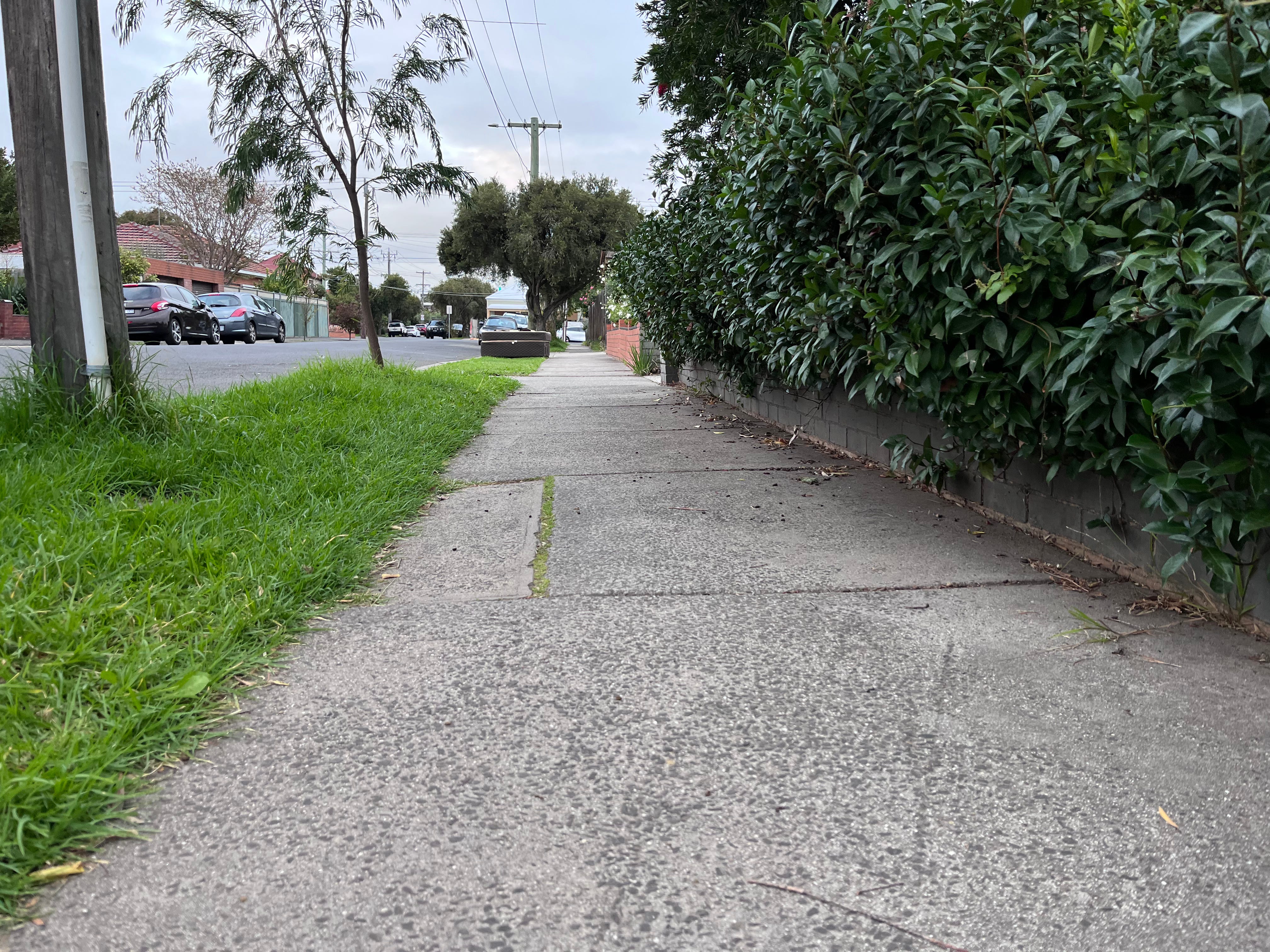
It must be around 8:30 am. The sun is well up, we haven’t seen rain for days and I’ve been walking a quiet suburban backstreet on my way to catch public transport to the city. It’s a Friday in April. I wear a jumper and shorts. When BOOM – next thing I know, I’ve tripped on a raised edge on the concrete path and I’m falling forwards.
==
Prior to this, I went consecutive nights with maybe 6 hours’ sleep. When I woke on tripping morning, I knew I would need to be very careful navigating the day. (This is a consequence of closed head injury 31 years ago - as I wrote about in pieces linked at the bottom of this story).
These situations happen. And when they do, I deliberately scale back anything that requires responsibility.
Why? I don’t want to be responsible for any decisions or actions I make with a fogged up brain. Such decisions and actions have caused much trouble throughout the past 31 years since brain injury. When my head feels this way, I cannot trust my judgment. So I have learned it’s best to get through the day (no big decisions, no big conversations, all care, no responsibility) and start again tomorrow.
So, I make decisions to help myself. This may seem odd (and feel odd), because I am both the person whose judgment is affected and the person making these decisions.
On this day, one decision I make is Not To Jaywalk. I simply won’t do it. Instead, I will walk until I find traffic lights, before I cross a busy road. Why? Because I do not trust my own perception of distance and time. Nor do I trust my capacity to make decisions quickly and competently under pressure.
What’s the penalty for crossing at the traffic lights? A longer walk.
What’s the penalty for mis-judging a jaywalk across a busy road? Possible death, disability, injury or property damage.
==
I’m falling.
I fall forwards as I trip.
My torso leans forward and it seems my feet and my legs have been left behind. I try to lift my feet. I try to lift my feet and to run them forwards very quickly. But no. I’m falling. This is how people fall over.
Awareness of previous shoulder injuries prevents me from bracing too hard with my left arm, but I’m falling slightly to my left and now – OOOFFFF – I hit the footpath.
I hit the footpath left knee first, left hand second and left shoulder a very close third. Bark scraped off at all those points. My chest must be a very close fourth, because now I feel a little winded as I lie face down on the suburban footpath.
Oooof.
But yeah. I’m OK.
I’ll buy some band-aids.
I’ll buy some paracetamol.
And I’ll be extra sure not to enter engage in any consequential moments this day.
==
When it comes to living with my emotions post brain-injury, the metaphor of falling flat on my face is a good one. That is something that metaphorically happens from time to time. And the consequences can be very serious. I reckon most arguments and most moments of poor communication in my life have occurred when I’ve been tired or (if not) stressed.
So, what happens in those times?
When I’m tired or stressed, I have very low reserves of tolerance. I feel agitated. I feel like I’m a racing car on the starting grid and my motor is revving. And it’s dark and foggy. And I have no headlights. And I feel enormous pressure to drive very fast.
In those times, if I feel threatened or wronged or misunderstood, I may react by trying to explain or justify myself, likely in an elevated, agitated state, maybe through tears of anger, themselves likely to lead to tears of sadness and self-pity. It’s not great. It’s a pattern. And I know that.
One of the great things about knowing that, is that I can prepare. If I can notice it, I get to step outside of it. Some people might use the phrase: “rise above it.” There are many ways to characterise the separation of self that happens when you can become the observer. For the past six years or so, I’ve gone with the idea of “being above the trees.”
Once I am above the trees, I can observe the situation. I can observe the interaction.
If I can observe it, then I can notice it.
If I can notice it, then I can choose how I respond to it.
If I choose how to respond to it, I prevent an emotional reaction.
It all sounds very simple, but it’s not simple and the results are profound.
This approach could be relevant in an emergency, when receiving verbal insults, when encountering a threat. Another example could be receiving unpleasant written marterial. Verbal situations are more challenging, because in the moment, it can be hard to achieve separation from the immediate environment.
Let’s go with a hypothetical example of written material:
“Until you do x, y, z, I will consider you dishonest, inauthentic, p, q, r…”
In the moment or receiving a message like that, I typically find it difficult to process. That’s OK. That’s a great advantage of written communication. There is no need to respond straight away.
So, with awareness, I observe the emotions that come up. Confusion is not an emotion, but possibly I feel confused. I may feel wronged. I may feel misrepresented, misunderstood. The emotions triggered here though are anger and sadness. Anger mainly.
I feel angry.
How does that manifest? I feel like calling the sender. I feel like typing out and sending a fiery defence.
So, above there trees, what do I observe? What do I notice? Well, my heart rate is up, my chest feels tight. There’s blotchiness in my vision. My breathing is shallow. Some of these things tell me there’s anxiety present as well.
The act of observing and noticing decouples me from the situation. It prevents me from reacting automatically.
What do I observe and notice about the interaction and message itself?
Well, perhaps I notice that the message in this case could be a call for control from the sender. Perhaps I notice that it is based on several misunderstandings, so it’s not even relevant to me. Perhaps I notice that it could be a projection of the sender’s state of mind, rather than being about me. Perhaps I notice that it is not something I need to address.
All of this is gold.
Three things: observe, notice, choose my response.
My choice of response here? Maybe I choose to wait a few days. To go slow. Get some sleep. At that point, with a clear mind, maybe I choose to let that correspondence go. There are too many misunderstandings to go into and probably limited appetite to learn, anyway.
Clear headed.
Slow.
No damage done.
That’s the goal. Something to aim for.
Observe, notice, choose my response.
When it works, I feel very pleased.
==
I hope you enjoyed that. This is Sproutings # 137. I usually publish a short story here each Wednesday morning Melbourne time. If you did enjoy it, please consider sending it to someone else that you think might also enjoy it. I’d love it if you subscribed — either for free or for a small annual or monthly payment. If you can’t pay, no problem. Others pay so that everyone can enjoy the Sproutings.
The “buy me a coffee” button is here for anyone who would like to tip in as a one off for this piece. Go well.
Other articles in which I’ve explored life after closed head injury include these listed here:
I looked up your disability for clarification. It doesn’t affect motor coordination as l though you were paralyzed. But you have learned to monitor your movements by getting enough sleep.
This is something we all need to master, particularly as we age!